
Choosing materials that last in a New York climate
Freeze-thaw winters and humid summers are hard on a building. The material choices that pay off over decades, not seasons.
New York asks a lot of a building. Winters freeze and thaw repeatedly, summers turn humid, and everything sits in salt air, road grit and city grime. The materials that thrive here are chosen for that climate rather than for the catalogue photograph.
Durability is not a luxury specification. It is the cheapest form of maintenance there is.
Start where the weather hits
The envelope — roof, facade, windows and flashing — takes the worst of it, and it is where durability spending returns the most. Investing here in proper detailing and materials rated for the actual exposure prevents the water intrusion that quietly causes most long-term building damage.
It matters that the detailing gets as much attention as the product. Water almost never comes through the middle of a surface; it comes in at junctions, penetrations, and terminations. A premium cladding installed with an indifferent flashing detail will fail exactly where the cheap cladding would have.
The freeze-thaw test
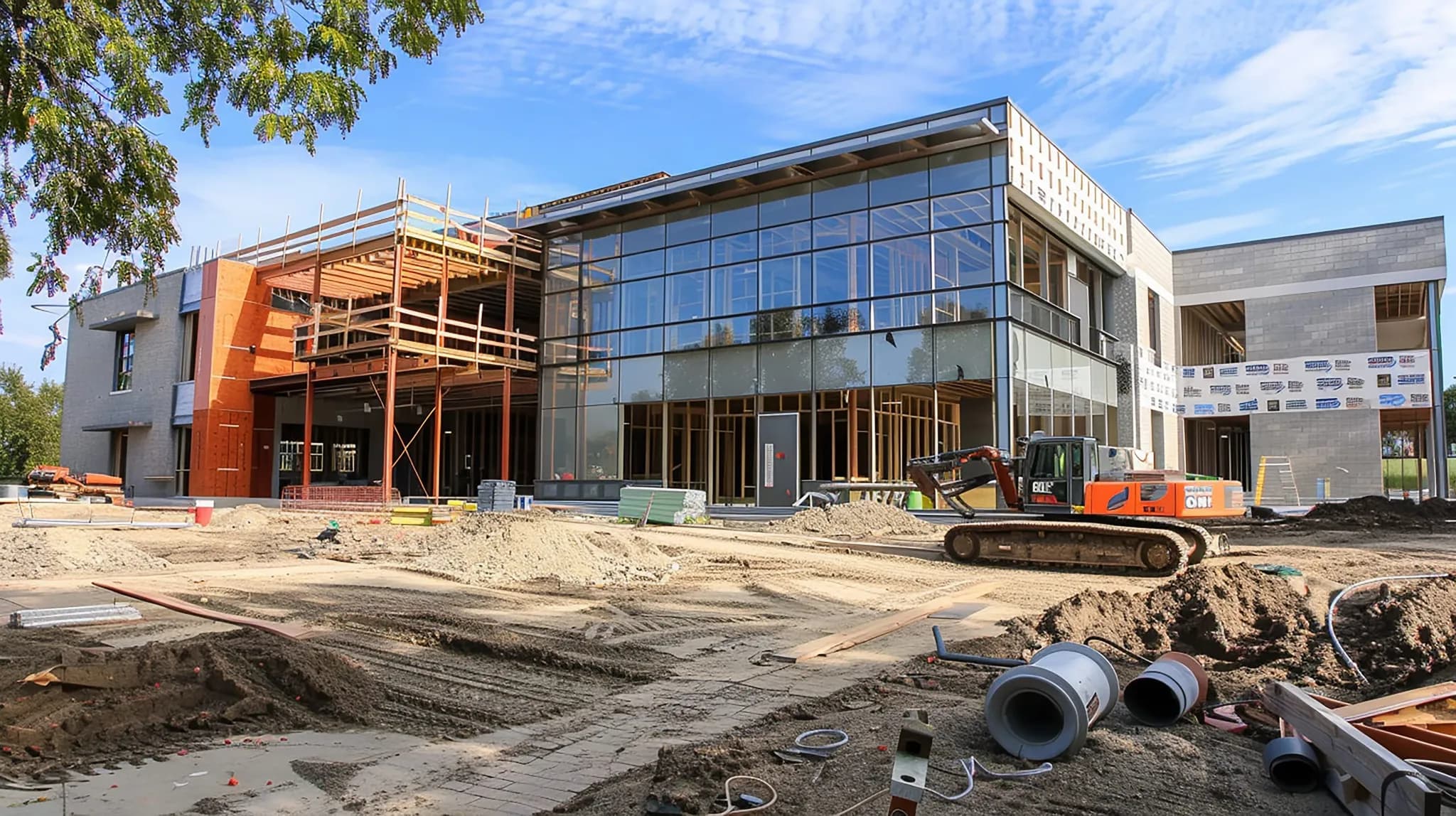
The single most useful question to ask about any exterior material in this city is how it handles water that freezes inside it. Porous materials absorb moisture; when it freezes it expands, and each cycle takes a little of the material with it.
That is why absorption rates matter on stone and masonry, why the mortar specification matters as much as the brick, and why a paving material that performs beautifully in a mild climate can spall through a single New York winter.
Ask one question of any exterior material here: what happens when water gets inside it and freezes?
The cost that isn't on the invoice
A cheaper material that needs replacing in five years is rarely cheaper. The replacement carries its own labour, its own disruption, its own disposal, and — in a city where access is expensive — often its own scaffolding.
We weigh lifecycle cost: purchase, maintenance interval, expected life and the cost of the eventual replacement, including the access needed to reach it. That last item is what changes the maths on anything high up or hard to get to, where the material is a small fraction of what it costs to change it.
- Purchase and installation cost
- Maintenance interval and what that maintenance involves
- Expected service life in this climate specifically
- Cost of access when it eventually has to be replaced
- Energy performance over the life of the building
Interiors take a different kind of punishment
Inside, the enemy is not weather — it is traffic, humidity and impact. Entrance halls take grit off the street every day of a New York winter, kitchens and bathrooms cycle through humidity constantly, and in a family home every corner below waist height is eventually hit by something.
So the durability questions change rather than disappear. Flooring wants a wear layer that can be refinished rather than replaced. Paint in circulation spaces wants a finish that can be washed. Joinery wants an edge detail that survives being knocked, and a hinge rated for a couple of decades of daily use rather than a couple of years.
None of this is expensive relative to the alternative, which is redecorating the busiest parts of the house every few years while the quiet rooms stay perfect.
Specifying with intent
Every material choice is documented in the drawings and in the budget, so there is no ambiguity on site and no quiet substitution to a lesser product. What is specified is what gets built.
Substitutions do happen — products get discontinued and lead times move — and when they do they come to you with the alternative, the price and what changes. What does not happen is a substitution decided on site by whoever was standing there when the delivery arrived short.
Have a project in mind?
We'll talk through the design, permit, and construction path — no obligation.
Start the conversationKeep reading
Ready to build with confidence?
Tell us about your project — design, permits, or a full build. We'll get back to you within one business day.
- Free, no-obligation consultation
- Licensed, bonded & fully insured
- Design, permits & build in one team
- Clear timeline and itemized budget
Prefer to reach us directly?
No call centers — you'll talk to the team that runs the build.
- Call+1 929 741 0550
- Emailinfo@maha-construction.us
- Visit169-20 Hillside Avenue, 2nd Floor, Suite 3, Jamaica, NY 11432
- HoursMon–Fri · 8:00 AM – 6:00 PM · Weekend by appointment